Topological Data Analysis in Social and Spatial Systems
Mason A. Porter
16:00–17:00
Nordita, 6th floor · fika area
Students & postdocs
 ScientiFika
Join us
ScientiFika
Join us
On Fridays, we bring together students and researchers across Stockholm’s universities to share their passion for science, explore different fields and enjoy delicious fika!
See upcoming talks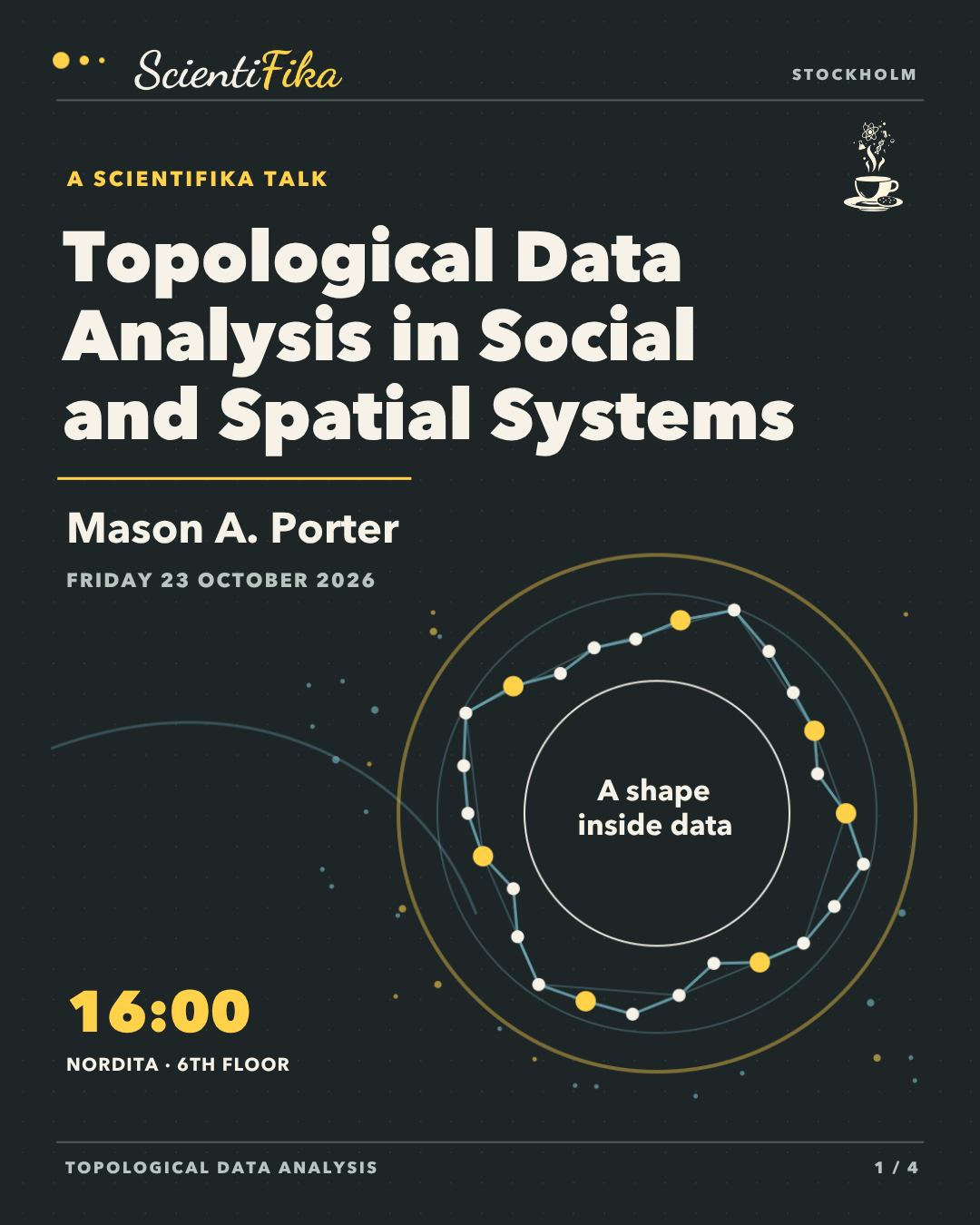
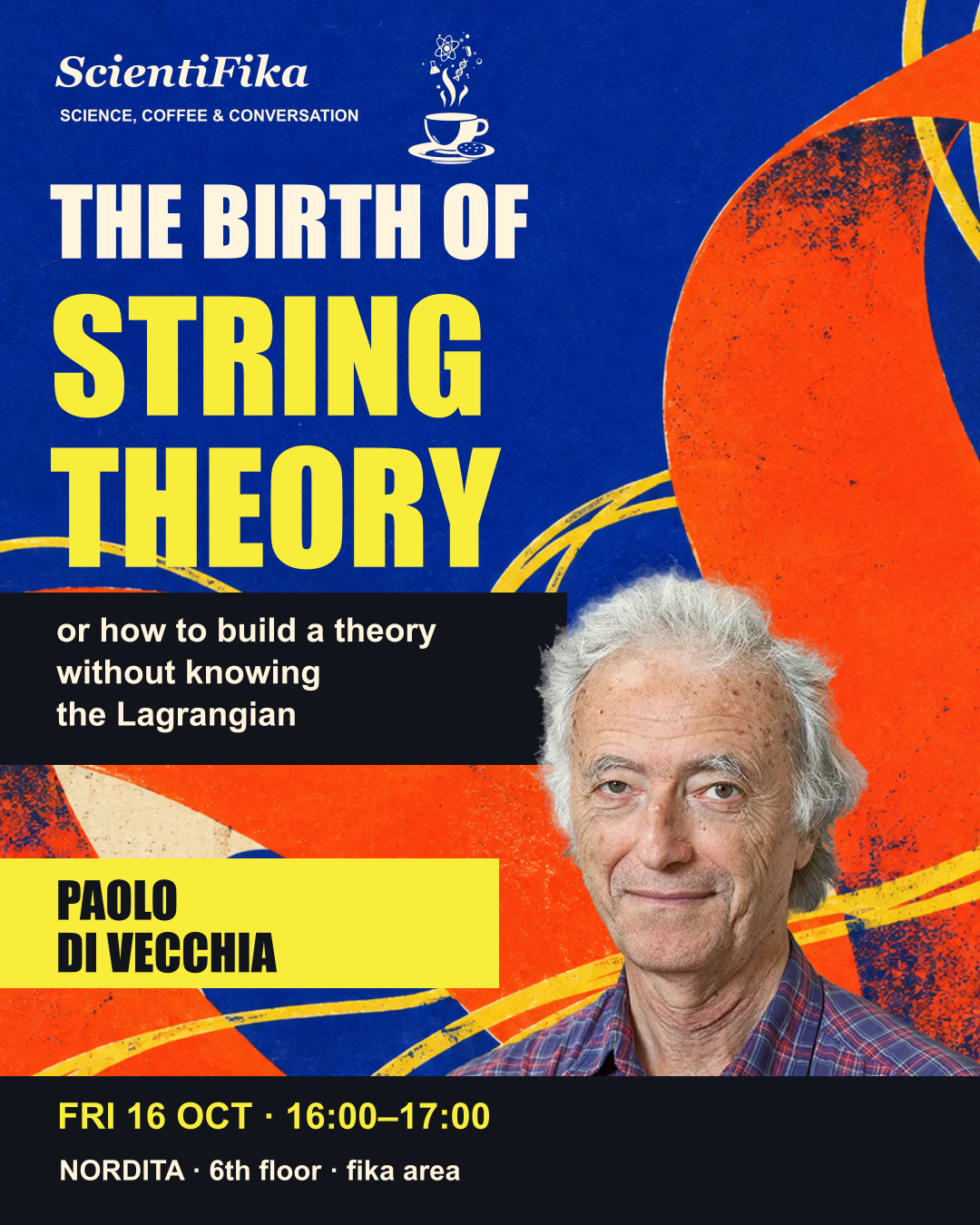
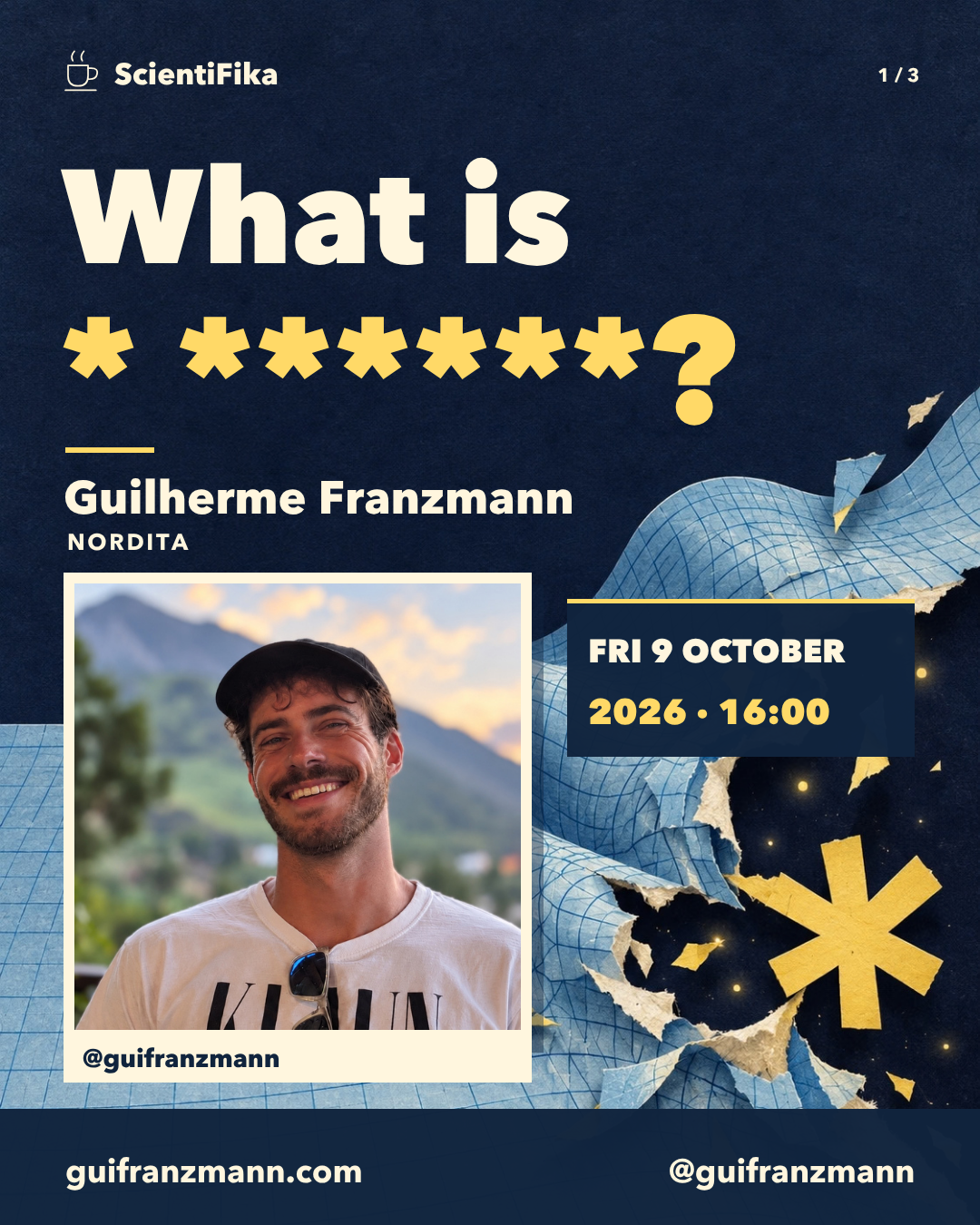 Recent Announcements!
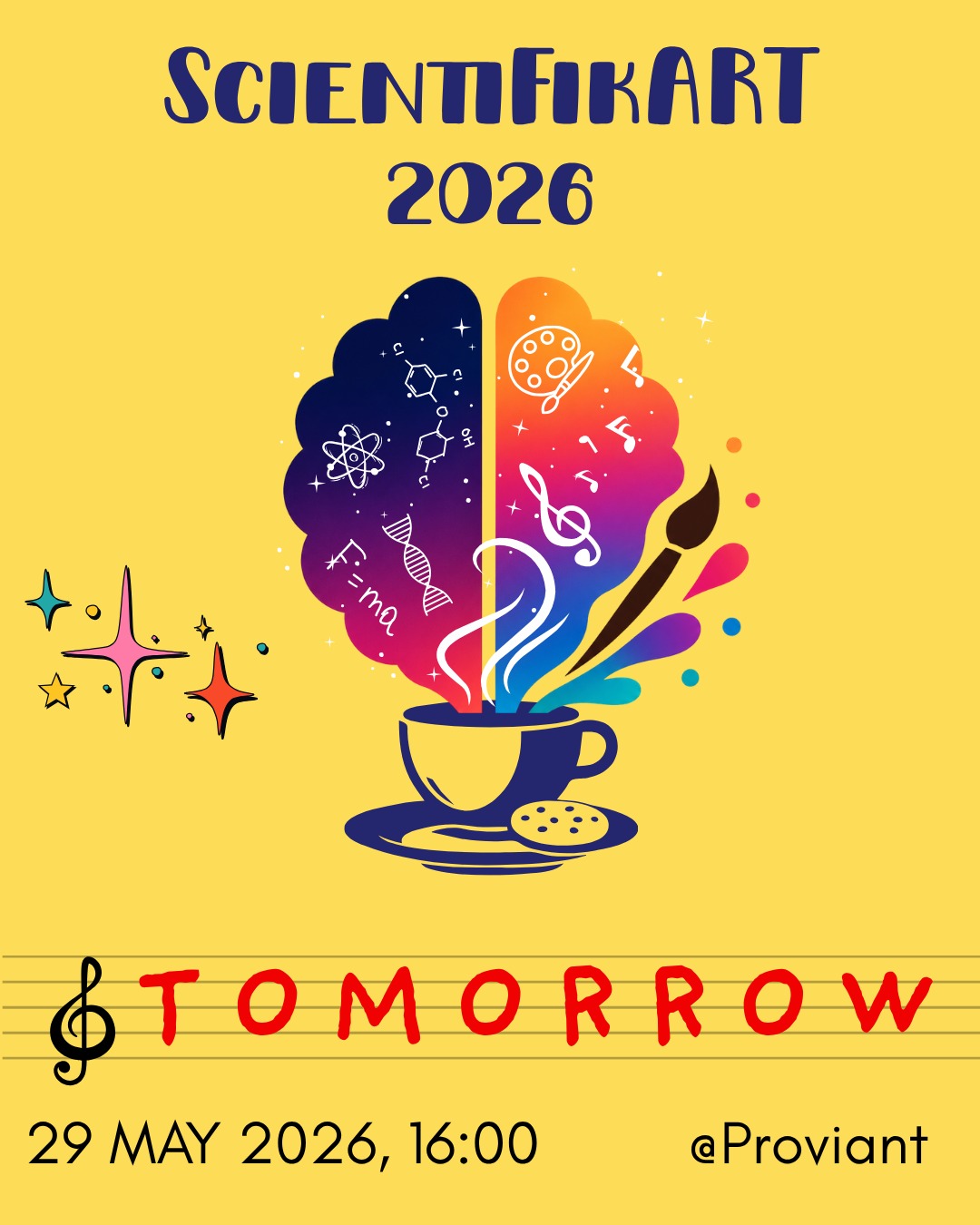
Art, music, poetry and more from the 29 May 2026 event at Proviant, Campus Albano.
About ScientiFikART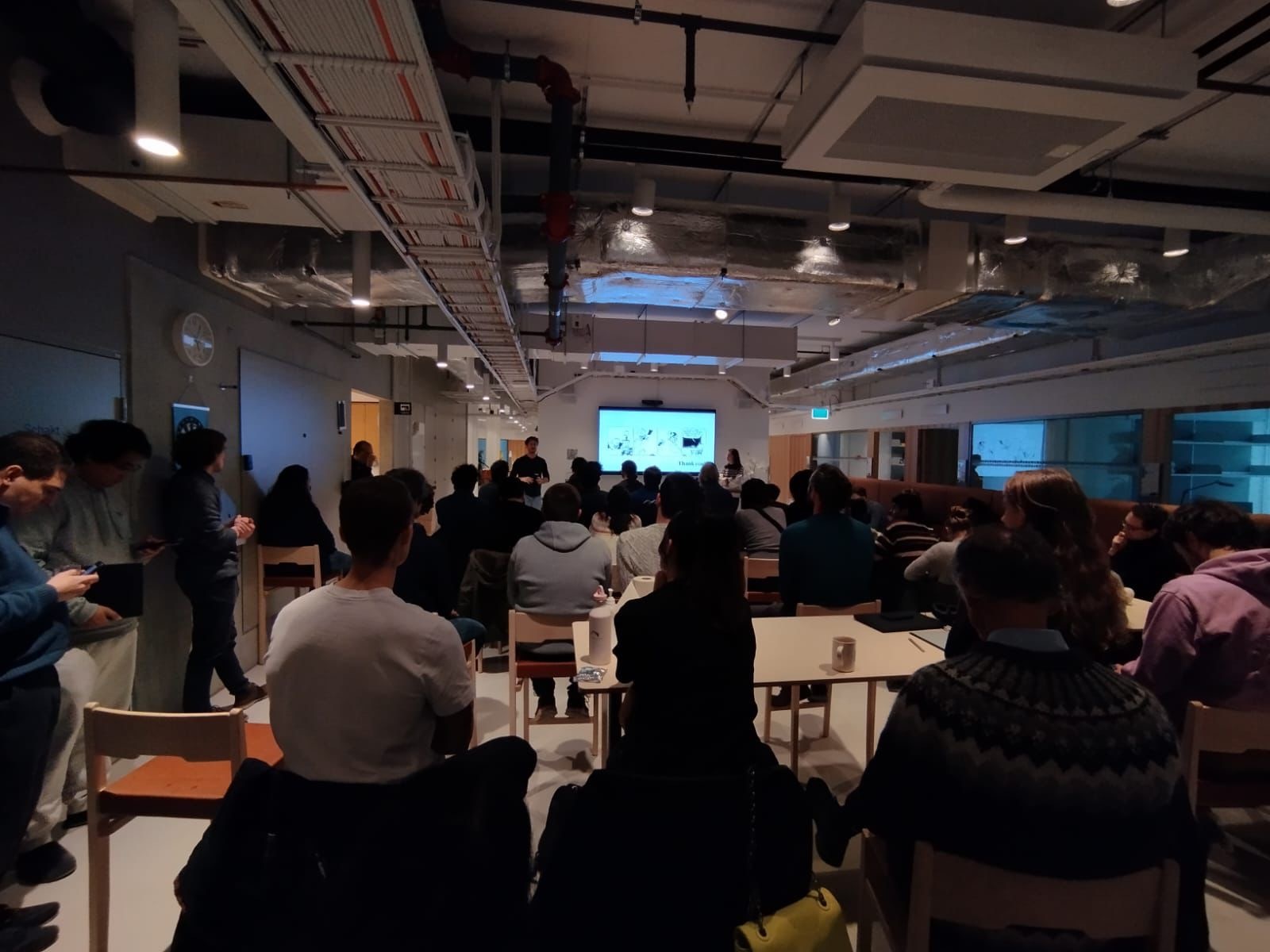
Speakers explain their work for people outside their field. You can ask questions during the talk and continue the discussion over fika.
Most Fridays are for students and postdocs. Some events also welcome senior researchers, faculty and staff; see each event’s page for details.
About ScientiFika